
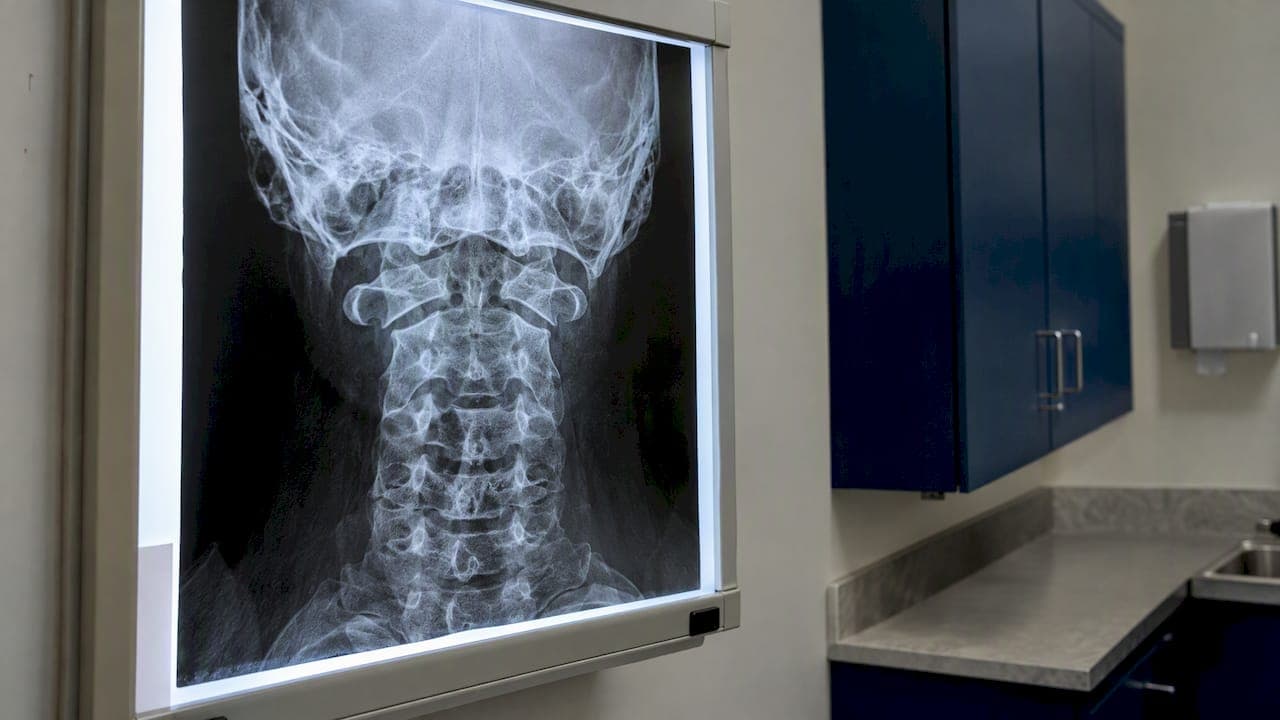
A chiropractor may take X-rays when your symptoms point to something that needs a closer look, or when the technique requires precise measurement of the spine. They shouldn’t be automatic for everyone. The research is clear that routine X-rays for every back or neck complaint don’t improve outcomes, and it’s just as clear that imaging earns its place when there are warning signs. In upper cervical care such as NUCCA, imaging is also how the doctor measures your alignment before making any correction.
This guide explains both sides honestly, so you can walk into any chiropractic office and ask good questions.
TL;DR
-
Guidelines say imaging is most valuable when “red flags” are present, such as a history of cancer, fever, unexplained weight loss or progressive neurological symptoms. Routine X-rays without red flags haven’t been shown to improve results.
-
Modern X-ray doses are low, but any dose adds a small, well-understood risk, so an X-ray should only be taken when the benefit outweighs it.
-
In NUCCA, imaging is part of the method: the doctor measures the position of the atlas (C1) before a light, low-force correction, with no twisting or cracking.
-
Tell every provider about X-rays you’ve already had. Bring prior images so you can avoid repeats.
-
You can always ask what a specific image will change about your care.
Table of Contents
Do chiropractors really use X-rays?
Some do, some don’t, and the reasons vary. A survey of chiropractic radiology specialists notes that chiropractors have used X-rays for many purposes: screening for anomalies, looking for reasons not to manipulate the spine, assessing posture and documenting subluxations. Not all of those uses match mainstream guidelines, and that’s exactly why it’s fair for you to ask questions.
In practice, the purposes fall into three groups:
-
Safety screening. Ruling out fractures, tumors, infection or instability before any hands-on care.
-
Diagnosis. Looking at joint spaces, bone structure and alignment when exam findings leave a question.
-
Technique-specific measurement. Some methods, including upper cervical techniques, rely on precise angles and distances that can’t be judged by touch alone.
The first group is uncontroversial. The third is where practices differ most, and where a clear explanation from your doctor matters.
What the research says about routine X-rays
Here is the evidence as it stands. A 2020 rapid review of routine spinal radiographs by chiropractors found no evidence that routine X-rays for functional or structural assessment improve clinical outcomes in patients without red flags. The authors point out that imaging is best reserved for cases where serious pathology is suspected.
A companion study of chiropractic students found that only 55.8% of imaging referrals followed guidelines. When imaging was appropriate based on clinical red flags, clinically significant findings were more than twice as likely to turn up (odds ratio 2.2). In plain terms: X-rays are useful when they’re pointed at a real question, and much less useful when they’re a default step.

The broader medical literature agrees. An article in the AMA Journal of Ethics on acute low back pain describes red flags as the trigger for imaging and notes that most acute back pain improves within a couple of weeks with conservative care. It also warns that unnecessary imaging can cause anxiety and lead to over-treatment of incidental findings that aren’t causing your pain.
That last point deserves emphasis. Many people have age-related changes on an image that are not the source of their symptoms. A good clinician explains what a finding means for you, rather than handing you a scary-sounding result.
Red flags that call for imaging or a medical referral
These are the kinds of signs that should prompt a doctor to consider imaging or send you to a medical colleague:
-
A history of cancer
-
Fever or signs of infection
-
Unexplained weight loss
-
Progressive weakness, numbness or other neurological changes
-
Significant trauma, such as a car accident with severe pain
If you have any of these, tell your chiropractor at the first visit. If you develop sudden severe symptoms, such as a sudden severe headache, weakness on one side, trouble speaking or loss of bladder or bowel control, go to urgent care or call 911 rather than booking a chiropractic appointment.
How safe are X-rays?
X-rays use ionizing radiation. The FDA explains that this carries a small, well-understood increase in the lifetime probability of cancer, which is why imaging should be done only when it’s medically necessary and the diagnostic benefit outweighs that small risk. The CDC’s overview of imaging procedures adds that all of us are exposed to ionizing radiation every day, and that any added exposure should be justified.
Two practical habits help you stay in control:
-
Share your imaging history. The CDC encourages patients to tell providers about earlier imaging so repeat X-rays can be avoided. Bring the images or the report, or ask the previous office to send them.
-
Ask about alternatives. For some concerns an MRI or ultrasound, which don’t use ionizing radiation, may answer the question better. It’s reasonable to ask, “Is there another way to get this information?”
Children and pregnancy
The CDC says that for children and people who are pregnant, radiation exposure should be limited, and that you can discuss your options with your provider. If you’re pregnant or might be, say so before any X-ray. For a child, ask what specific question the image will answer and whether the answer would change the plan.
Why NUCCA uses imaging differently
NUCCA (National Upper Cervical Chiropractic Association) care focuses on the top of the neck, especially the atlas, the first vertebra, which supports the weight of your head. Think of it as a bowling ball balanced on a small ring of bone. Because the atlas is small and its position varies from person to person, the doctor needs real measurements to know whether it’s off-center and in which direction.
That’s the reason our approach begins with a comprehensive examination and advanced imaging before any correction. The images aren’t a routine formality for us. They tell the doctor:
-
Whether the atlas is out of alignment, and by how much
-
What direction the correction should go
-
Whether anything on the image calls for a referral instead of adjustment
-
How you’re responding over time, so we can see if the correction is holding
It’s worth being straightforward about the evidence. The research above shows that routine X-rays haven’t been proven to improve outcomes for general back or neck pain without red flags. NUCCA imaging is a different purpose: it’s the measurement step a low-force, precise technique is built on, and it’s paired with a clinical exam and your history. We’d rather explain this openly than have you wonder.
What happens at a first visit
People who’ve been through other care often arrive wary, so here is the sequence in plain steps.
-
Conversation and history. We ask what’s happening, how long it’s been going on, what you’ve tried (medication, massage, physical therapy, dental care) and what imaging you’ve already had.
-
Examination. A hands-on exam looks at posture, movement and how your neck and spine are behaving.
-
Imaging when indicated. If it’s appropriate for your situation, images are taken so the doctor can measure your alignment. Prior imaging can sometimes reduce what’s needed, so bring it.
-
A clear explanation. You see what we see and hear what it means, and what it doesn’t mean.
-
A light correction, if you’re a fit. NUCCA is a precise, low-force adjustment with no twisting, popping or cracking of the neck.
-
A plan aimed at holding. The goal is for your alignment to hold so you need fewer visits over time, not more.
If the exam shows something that belongs with a medical doctor, we’ll say so and coordinate rather than push ahead.
Getting ready for the X-ray itself
The CDC’s X-ray fact page is a good plain-language primer on what the procedure is. A practical detail from the same body of guidance: you may be asked to remove jewelry or clothing with metal zippers, since metal can show up on the image and blur it. Wearing a simple top without metal fasteners saves time. Tell the staff about any implants or hardware.

What about Medicare and insurance?
If you’re on Medicare, the rules are specific, and they’re worth knowing before your visit. Medicare coverage for manual manipulation requires documenting a subluxation. According to CMS provider compliance guidance, that can be done through a physical exam or through imaging, and an X-ray used for this purpose must be taken within 12 months before or 3 months after treatment begins. An X-ray isn’t required to start care.
CMS has also published guidance on referral of patients for X-rays by chiropractors, which matters because Medicare may not pay for X-rays ordered by a chiropractor, so imaging can end up being referred to another physician. Rules change, so confirm your own coverage with Medicare or your plan before you go. We don’t publish a price for care, so call the clinic for details on fees and how your plan applies.
Questions to ask any chiropractor about X-rays
You don’t need to be a radiology expert. These questions help you tell routine habits from clinical reasoning:
| Ask | A good answer sounds like |
|---|---|
| Why do you want an X-ray for me? | A specific reason tied to your symptoms, exam or technique |
| What will it change? | A concrete effect on the plan, or on whether you should be referred |
| Can you use my existing images? | Yes, if they’re recent and suited to the question |
| Will you repeat them? | Only when there’s a clinical reason, not on a fixed schedule |
| What if something unexpected shows up? | You’ll get an explanation and, when needed, a referral to a medical doctor |
If the answers are vague, or you’re told you must have a full series of images before anything else is discussed, it’s fine to slow down and get a second opinion.
Our perspective on imaging
We’ve been practicing NUCCA in the Twin Cities since 1986, when Dr. Kerry and Lisa Johnson opened the first NUCCA clinic in Minnesota. Our five NUCCA-certified doctors see patients of all ages, and many of them arrive after other care hasn’t given lasting answers. They have headaches, migraines, dizziness, neck pain, jaw pain or lingering whiplash, and they’re understandably tired of guessing.
Our view is simple. Imaging should earn its place. For a technique built on measuring the atlas, we won’t make a correction without knowing where the atlas sits, because guessing is the opposite of precise. At the same time, we agree with the guidelines that an X-ray is not a cure-all, that repeated imaging needs a reason, and that red flags belong in a medical doctor’s hands first. If you tell us about dizziness, headaches that changed suddenly or any neurological symptoms, we want you working with your medical team too.
What we want you to leave with is understanding: what the image shows, what we do about it, and how we’ll know it’s working. A gentle correction that holds is better for you than a long run of visits.
— Johnson Spinal Care Clinical Team
When upper cervical imaging is most relevant
Not every condition calls for the same level of investigation. Here is how we think about the symptoms people ask us about most.
Headaches, migraines and neck pain
If headaches have lingered after medication, massage or physical therapy, the position of the upper neck is one thing worth measuring. Our pages on whether a chiropractor can help with migraines and on chronic daily headaches and the neck go through the research. If you wake up stiff most mornings, this guide to waking up with neck pain covers sleep position and when to get evaluated.
Dizziness and vertigo
See a medical doctor first for new, sudden or severe dizziness, especially with headache, vision changes, weakness or speech trouble. If those causes have been ruled out and answers are still missing, upper cervical alignment is worth examining. Read more on dizziness and the spine.
Whiplash and injury recovery
After a car accident or fall, a medical evaluation comes first if you have severe pain, numbness, weakness or any loss of consciousness. Once serious injury is excluded, imaging helps us see how your neck is sitting and plan care alongside your medical team.
Children and teens
Because radiation exposure should be limited in children, we start by asking what question an image would answer. A child with scoliosis under a medical doctor’s care continues with that doctor, and we coordinate with them.
See a NUCCA doctor near you
We care for patients at three Twin Cities clinics: Apple Valley, Savage and White Bear Lake (Vadnais Heights). Patients rate us 4.9 stars across 394 Google reviews, and most new patients come from referrals by existing patients and other health professionals.
If you want an exam-and-imaging-first approach with a gentle correction, learn how NUCCA upper cervical care works and book a consultation at the clinic closest to you. Bring any previous X-rays or MRI reports and a short list of what you’ve already tried.
FAQ
Do chiropractors look at X-rays?
Yes, many do, both ones they take and ones from other providers. At our clinics, we ask for your previous imaging at the start so we can use what exists and avoid unnecessary repeats. We interpret any image alongside your exam and history, not on its own.
Are chiropractic X-rays safe?
X-rays involve a small dose of ionizing radiation, and the FDA describes a small, well-understood increase in lifetime cancer risk, which is why they should be used only when the benefit outweighs it. Tell your provider if you’re pregnant or might be, and mention any recent imaging.
Can I get chiropractic care without an X-ray?
Often, yes. Guidelines don’t support routine X-rays for everyone, and many chiropractic approaches begin with an exam alone. NUCCA relies on measurement of the atlas, so imaging is part of our process, but we’ll explain exactly why it’s needed in your case, and we’ll use existing images where we can.
Why do some doctors discourage chiropractors?
Part of the concern is the routine use of X-rays and manipulation without clear clinical reasons, which the research above questions. The best response is a provider who explains their reasoning, screens for red flags, works with your medical doctor and uses gentle methods. Ask questions until you’re comfortable.
Sources
-
The clinical utility of routine spinal radiographs by chiropractors: a rapid review (PubMed)
-
Guideline adherent radiographic imaging by chiropractic students and diagnostic yield (PubMed)
-
Historical influence on the practice of chiropractic radiology (PMC)
-
Medicare documentation checklist for chiropractic doctors, CMS