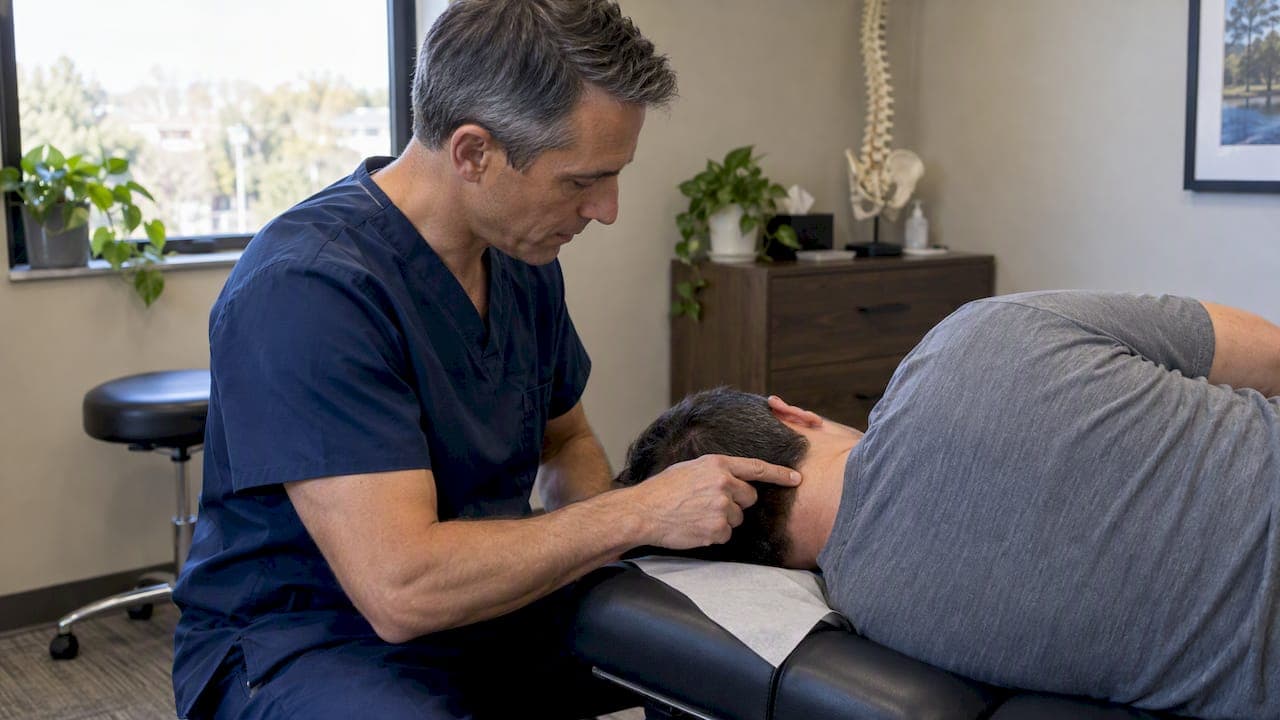
Gentle chiropractic is care that corrects spinal alignment without twisting, popping or cracking your neck. The adjustment is low-force and measured beforehand, so the doctor knows exactly where to apply light pressure and in which direction. At Johnson Spinal Care, that approach is called NUCCA (National Upper Cervical Chiropractic Association) care, and it focuses on the top of the neck, especially the atlas, or C1 vertebra.
If you have been braced for a loud crack every time you thought about a chiropractor, or you have tried other care and still have headaches, dizziness or neck pain, this guide explains what “gentle” really means, how it differs from traditional adjusting, and how to decide whether it fits you.
TL;DR
-
Gentle (low-force) chiropractic corrects alignment with a light, precise touch. There is no rotation of the neck and no cracking sound.
-
NUCCA care measures first. Imaging and an examination come before any adjustment, so the correction is specific to you.
-
Research supports spinal manipulation for migraine and cervicogenic headache, but results vary and benefits can take a few visits to show.
-
Sudden, severe headache or dizziness with confusion, slurred speech, weakness or vision loss is an emergency. Call 911 rather than booking a visit.
-
Johnson Spinal Care has three Twin Cities clinics (Apple Valley, Savage and White Bear Lake), five NUCCA-certified doctors and has practiced since 1986.
Table of Contents
What “gentle chiropractic” actually means
People use several phrases for the same idea: light touch, low force, non-force, no-crack. They all describe an approach that avoids the high-velocity, rotational thrust most people picture, the one that produces a pop.
There are a few different gentle methods in the profession. Some use a small handheld instrument, some use gentle pressure on soft tissue, and some, like NUCCA, use a precisely calculated correction at the top of the neck. They differ in method, so “gentle” on a clinic’s website is not enough. Ask three questions:
-
What exactly will you do with my neck?
-
How do you decide where to adjust?
-
How will we know whether it worked?
A good answer involves measurement, a specific plan and a way to track results. That is the standard we hold ourselves to.
Why the top of the neck gets so much attention
Your head weighs roughly as much as a bowling ball, and the atlas (C1) is the small ring of bone that carries it. Just below it sits C2, the axis. Together they allow much of the turning and nodding of your head, and they sit close to the brainstem, where the spinal cord begins.
Because these two vertebrae are so mobile, they are also easy to strain, after a fall, a sports collision, a car accident or years of posture stress. NUCCA doctors look for a misalignment here and ask whether it could be contributing to symptoms such as headaches, dizziness, neck stiffness or jaw discomfort. We do not claim every case traces back to the atlas. We claim it is worth measuring, because the answer changes the plan.
To learn more about the technique itself, see our page on what NUCCA chiropractic care is. The National Upper Cervical Chiropractic Association also describes NUCCA as a gentle, precise approach focused on aligning the head and neck.
How NUCCA differs from traditional chiropractic
Many people have had a general chiropractic adjustment and either liked it or dreaded it. NUCCA is a different process from start to finish.
| Traditional adjusting | NUCCA upper cervical care | |
|---|---|---|
| Focus | Often the whole spine | The upper cervical spine, especially C1 and C2 |
| Before treatment | Varies by clinic | Examination and advanced imaging to measure alignment |
| The adjustment | Often a quick thrust, sometimes with a pop | A low-force correction with no twisting or cracking |
| What you feel | Often a pop or stretch | Very little, sometimes nothing during the correction |
| Goal | Relief of restriction | Holding alignment so you need fewer visits over time |
That last row matters. A plan built around holding alignment is meant to space your visits out as your body stabilizes, rather than keeping you on a fixed weekly schedule indefinitely.
What a gentle NUCCA visit looks like
We tell new patients exactly what will happen, because uncertainty is what makes most people nervous. Here is the usual flow.
-
Conversation and history. We ask about your symptoms, when they began, past injuries, and what you have already tried: medication, massage, physical therapy, dental care or other treatments.
-
Examination. The doctor checks posture, balance, range of motion and how your head and neck sit relative to the rest of your spine.
-
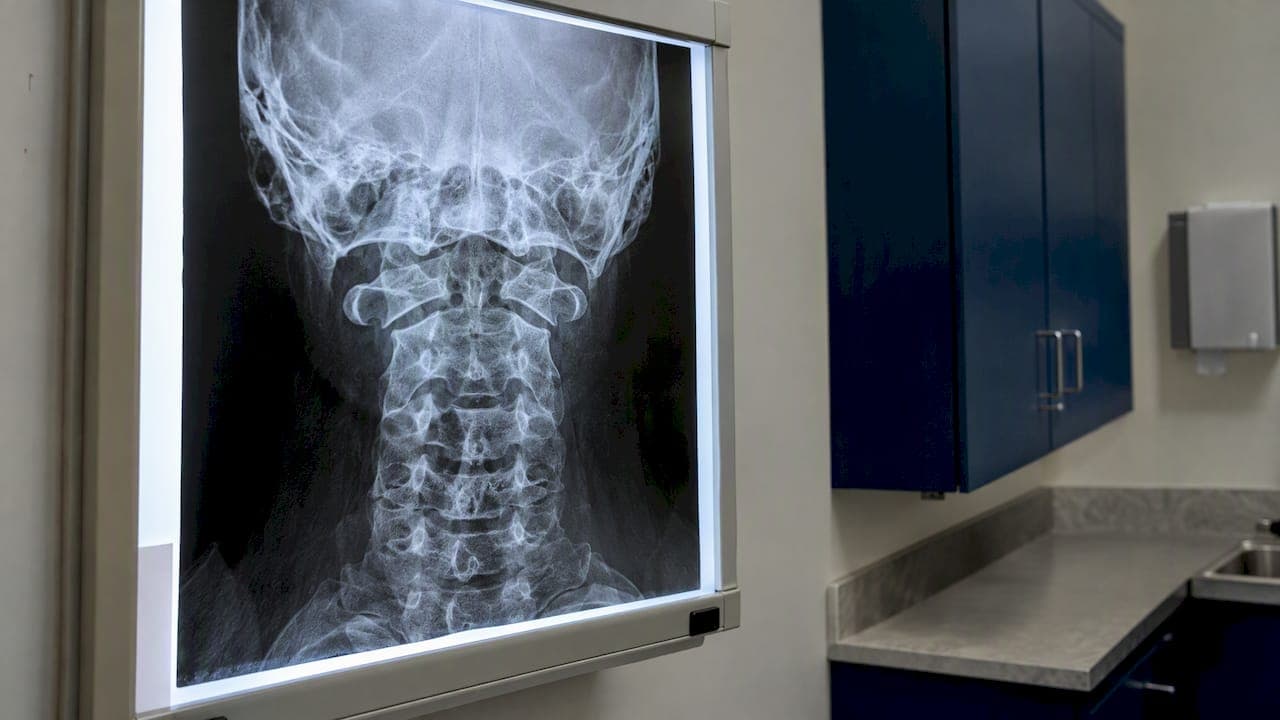
Advanced imaging. Digital X-rays let the doctor measure atlas alignment precisely instead of guessing by feel.
-
The correction. If imaging and examination show a misalignment, the doctor applies a light, specific, non-rotational correction. Many patients feel very little during it.
-
Follow-up measurement. We recheck alignment and symptoms, then adjust the plan. Care is individualized, and we only correct again when it is needed.
No one twists your neck. If something feels wrong at any point, you can say so and we stop.
Is gentle chiropractic safe?
Safety is the question behind most searches for a no-crack chiropractor, so here is the evidence as it stands.
The debate is mostly about high-velocity cervical manipulation, the quick thrust. Rare reports of serious events such as arterial dissection have fueled it. A systematic review and meta-analysis of randomized trials found that adverse events after cervical manipulation were typically mild and did not occur at a higher rate than in control groups. That is reassuring, but it concerns manipulation in general, not NUCCA specifically.
What we can say about our own method is how it is built: imaging first, a low-force correction, and no rotation of the neck. If you have had a stroke, a known blood vessel problem, a recent head or neck injury with severe symptoms, or you take blood thinners, tell your doctor and ours before any neck care. We will coordinate with your medical team when that is appropriate.
Headaches and migraines
Headaches are the reason many of our patients first call. If you have lived with them for years, you have probably tried medication, massage, physical therapy or all three.
The research is worth knowing in both directions. Evidence-based guidelines published in 2011, drawing on 21 studies, recommend spinal manipulation for episodic or chronic migraine and for cervicogenic headache (headache that originates in the neck). For tension-type headache, the evidence on manipulation alone was equivocal. Those same guidelines note that the dose, meaning how often and for how long, should be personalized, and that benefits can take a few visits to appear consistently.
A review of complementary and integrative approaches to migraine adds honest context. Many studies had methodological limits, and part of any effect may be placebo. That is why we focus on outcomes you can count, such as fewer headache days, alongside how you feel. We suggest keeping a simple headache diary before your first visit.
For a deeper look, read our summary of the research on chiropractic care and migraines and our page on chronic daily headaches and the neck.

When a headache is not a chiropractic matter
Most headaches are minor, but some signal something serious. Mayo Clinic advises getting emergency care for a sudden, severe headache, or one with confusion, slurred speech, vision loss, weakness, trouble moving part of the body or ongoing vomiting. Do not wait for an appointment in those cases.
Dizziness and vertigo
Dizziness covers many sensations, from feeling faint or woozy to the spinning that is more precisely called vertigo, as Mayo Clinic explains. Causes include inner ear conditions, medications, blood pressure changes and, in some people, the neck.
If you have seen an ear, nose and throat specialist or done vestibular therapy without lasting answers, the upper neck is one more place to look. Our approach is to identify and correct misalignment at C1 and C2 when it is present, and to work alongside inner ear care rather than against it. When neck-related problems and inner ear problems exist together, combining upper cervical correction with vestibular rehabilitation often serves people better than either alone, as we describe in our vertigo guide.
See a medical doctor first if your dizziness is new, severe or comes with the warning signs listed above. We would rather you rule out the dangerous causes before you see us. Our pages on dizziness and vertigo and vertigo care in White Bear Lake go further.
Neck pain and waking up stiff
Waking up with a sore neck often points to how you slept, but it can also be a sign that something is irritated and your sleeping position is just exposing it. Practical steps to try for a couple of weeks:
-
Keep your neck in line with your spine: a pillow that fills the gap between your shoulder and head if you sleep on your side, a thinner one if you sleep on your back.
-
Avoid sleeping on your stomach, which holds your head turned for hours.
-
Check how long you look down at a phone or laptop in the evening.
-
Note whether the pain eases within an hour of getting up or lingers all day.
If morning neck pain keeps returning, spreads into your arm, comes with headaches or dizziness, or follows an injury, it is worth an evaluation. Our article on waking up with neck pain explains what to look for, and we see neck pain patients at our Savage clinic.
Jaw pain, whiplash and injury recovery
TMJ and jaw discomfort. The jaw and upper neck share muscles and nerves, and a head that sits forward or tilted can load the jaw. If a dentist has treated your bite and you still have clicking or pain, a posture and C1 evaluation can sit alongside dental care. See our piece on upper cervical alignment and the jaw.
Whiplash and sports injuries. After a car accident, a fall or a concussion, the upper neck takes a lot of the force. Lingering neck pain and headaches are common reasons people come to us. We examine and image before treating, and we encourage you to keep your medical team informed. Anyone with concussion symptoms should be cleared by a medical provider first.
Gentle care for kids, athletes and seniors
Our five doctors see patients of all ages. Parents often ask about children and teens, for example a young athlete with neck or back pain, or a child with scoliosis under a pediatrician’s or orthopedist’s care. A low-force method with no twisting is a natural fit for smaller bodies, and the first visit is the same careful process: history, exam, imaging if it is warranted, and a clear plan. We do not replace your child’s medical care, and we will talk through what we find with you.

Seniors benefit from the same approach for similar reasons: precise, light and specific, with no forceful movement.
Our perspective: why we measure first
We opened in 1986 as the first NUCCA clinic in Minnesota, and we are celebrating 40 years in 2026. In that time the most common thing patients tell us is some version of “I have tried everything.” They are often tired, in pain and wary of being pushed through another treatment that does not hold.
We believe gentle only counts if it is also precise. A light touch applied in the wrong place or direction accomplishes nothing, so we measure before we correct. We also believe a good plan ends: if your alignment holds, you should need us less over time. And we believe in honesty. We cannot promise an outcome, some people respond quickly and others take several visits, and some conditions need medical care first or alongside ours.
If you read this and you are nervous, that is normal. Ask us anything before you book. Our job is to explain, not to rush you.
— Johnson Spinal Care Clinical Team
Choosing a gentle chiropractor near you
Whichever clinic you choose, look for these things:
-
A clear description of the technique, not just the word “gentle.”
-
Examination and imaging before treatment, with an explanation of what they show.
-
Specific credentials in the method being used. Our five doctors are NUCCA-certified.
-
A plan with a goal, including how you will know it is working and when visits can space out.
-
Willingness to coordinate with your doctor, dentist or physical therapist.
-
Real feedback from patients. Ours is a 4.9-star Google rating across 394 reviews.
Most of our new patients come from referrals by existing patients and other health professionals, which we take as the best sign we can offer.
Book a NUCCA evaluation
We see patients at three Twin Cities locations. The Apple Valley clinic and our Savage clinic serve the south metro, including Lakeville, Burnsville, Prior Lake and Shakopee. The White Bear Lake clinic (Vadnais Heights) serves the east metro, so you do not have to drive across the cities. Read about our full range of NUCCA upper cervical care, from headaches and migraines to back pain and sciatica, and book your evaluation through the clinic page nearest you. Check the clinic page for current hours.
FAQ
Does gentle chiropractic really work as well as traditional adjusting?
The research on manipulation covers mostly traditional methods, and it supports them for migraine and cervicogenic headache. NUCCA is a different, low-force technique, and we cannot claim identical results to studies of other methods. What we can say is that it is measured, specific and carried out without twisting, and we track your progress so you can see whether it is helping.
Will I hear any cracking during a NUCCA adjustment?
No. The correction is low-force and non-rotational, so there is no popping or cracking. Many patients are surprised to feel very little, sometimes nothing, while it happens.
How many visits will I need?
It depends on your condition and how your body responds. Benefits may take a few visits to show consistently, and the plan is built to hold alignment so visits become less frequent over time. Your doctor will explain the schedule after your examination.
Should I see a medical doctor first?
Yes, if your headache or dizziness is sudden, severe, or comes with confusion, slurred speech, weakness, vision loss or ongoing vomiting. Those are emergency signs. For long-standing symptoms, many people see us alongside their medical team.
Can children get gentle chiropractic care?
Yes, our doctors see patients of all ages, including children and teens. The low-force approach suits younger patients, and we work with, not instead of, a child’s pediatrician or specialist.
Sources
-
Evidence-based guidelines for the chiropractic treatment of adults with headache (PubMed)
-
Adverse events after cervical spinal manipulation: systematic review and meta-analysis (PubMed)
-
Complementary and integrative medicine for episodic migraine (PMC)