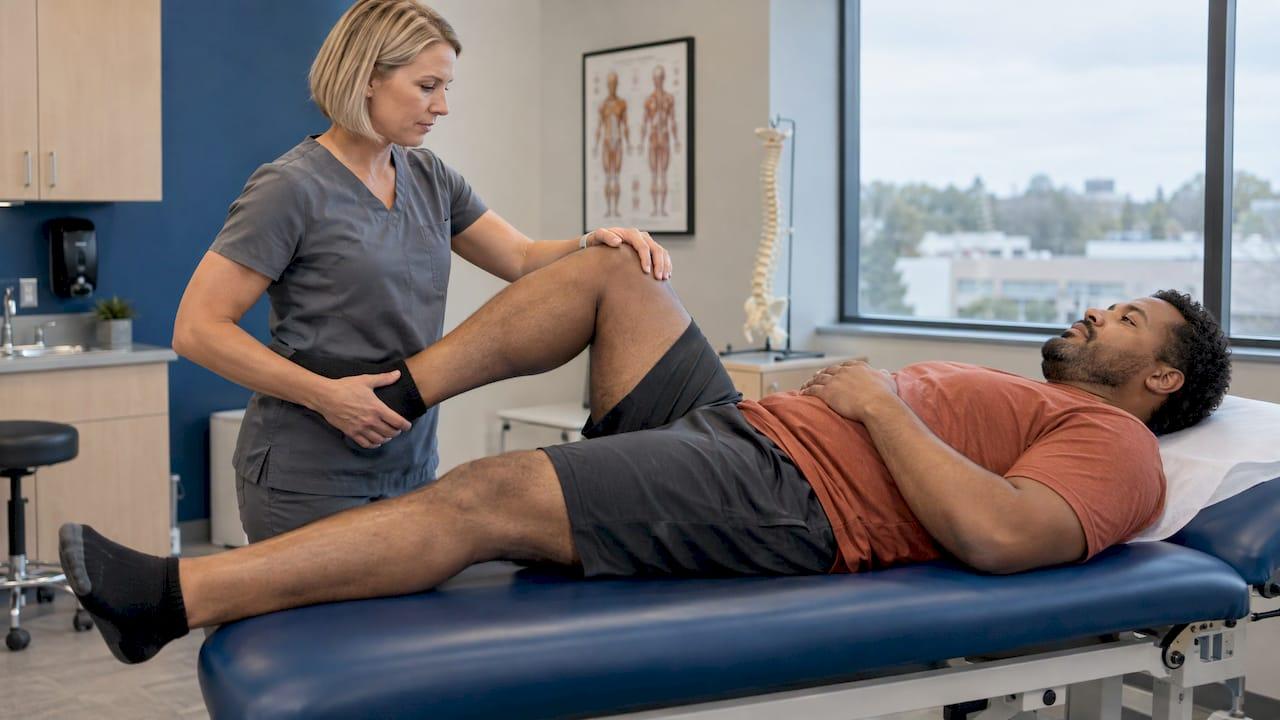
Dizziness after a concussion is common, and for most people it fades within a few weeks. When it lingers, the cause is often more than one thing: the inner ear, the brain’s processing of balance signals, and the neck can all contribute. If your symptoms have lasted past the first weeks, a careful look at the upper neck is a reasonable part of the answer, alongside your medical team. At Johnson Spinal Care, our NUCCA doctors examine and image the upper cervical spine before any correction, and we use a light touch with no twisting or cracking.
TL;DR
- Dizziness affects a large share of people after a concussion: clinical guidance puts the range at 24% to 83%, and potentially up to 90% in the acute phase.
- Many people improve in the first 1 to 2 weeks. If it continues, see your primary care provider.
- Causes include inner ear problems such as BPPV, changes in how the brain processes balance, and neck-related (cervicogenic) dizziness.
- Severe or worsening symptoms, confusion, repeated vomiting or weakness need emergency care.
- For neck-related dizziness, we offer a gentle NUCCA exam and imaging that fits alongside your medical care.
Table of Contents
- What dizziness after a concussion feels like
- How long does it last?
- Why you can still be dizzy: three common sources
- The concussion and neck connection
- When to get medical care first
- What treatment usually involves
- How the neck is evaluated
- What chiropractic research says
- Perspective: why we look at the upper neck
- What a first visit looks like
- Neck-friendly habits while you recover
- Book a NUCCA evaluation
- FAQ
- Sources
What dizziness after a concussion feels like
People describe it in different ways. According to the Defense Health Agency’s head injury and dizziness fact sheet, it can feel like fainting or lightheadedness, weakness or unsteadiness, or the room spinning. It may come on suddenly or when you turn your head, and it can last seconds, minutes or longer.
Doctors separate two sensations. Dizziness is feeling woozy, faint or unsteady. Vertigo is a false sense that your surroundings are moving. Stanford Medicine’s ear institute adds that post-concussive dizziness may also show up as imbalance or sensitivity to motion, such as in busy stores or while scrolling.
How long does it last?
The same fact sheet says many people have dizziness during the first 1 to 2 weeks and it usually resolves on its own. Guidelines from the University of Arkansas for Medical Sciences (2024) report that 85 to 90% of people with mild TBI see symptoms resolve by 3 weeks. From 3 weeks to 3 months, they recommend vestibular and balance rehabilitation therapy. Beyond 3 months, they advise further diagnostic workup.

Stanford notes that symptoms can persist for weeks to months, and that most people improve with time and exercise. If you are past the three-week mark and still unsteady, that is the point to ask for a closer look instead of waiting.
Why you can still be dizzy: three common sources
Post-concussion dizziness is rarely one problem. Stanford describes it as a mix of vestibular dysfunction (the balance system in the inner ears and brain), neck muscle tension and changes in brain processing. The TBICoE clinical guidance helps tell them apart.
| Source | What it tends to feel like | Typical clue |
|---|---|---|
| BPPV (inner ear crystals out of place) | Brief spinning spells | Triggered by specific head movements, such as rolling over in bed |
| Central or peripheral vestibular dysfunction | Imbalance, motion sensitivity, spinning | Worse in busy visual settings or with quick head turns |
| Cervicogenic (neck-related) dizziness | Episodes lasting minutes to hours | Triggered by neck movement or position, often with neck pain or stiffness |
The fact that BPPV is the most common cause of dizziness persisting beyond 3 weeks, per a 2022 review in Frontiers in Neurology, is one reason a proper exam matters. Different causes need different care.
The concussion and neck connection
A concussion rarely happens without the neck taking some of the force. A car crash, a hit in football or hockey, or a fall all move the head quickly on the neck. A University of Kansas Health System protocol, published in PMC in 2022, calls the cervical region one of the most important aspects of concussion. It explains that neck pain can reflect disruption of signals from the upper cervical joints that feed into the brain’s balance centers, which affects how the head and neck orient in space.
Think of your head as a bowling ball balanced on top of a thin column. The upper neck, especially the atlas (C1, the top vertebra), contains dense sensors that tell your brain where your head is. When that area is irritated or out of alignment, the brain can receive mixed messages about position and motion. That is a plausible reason for neck pain after a concussion to travel with dizziness, headaches and a foggy feeling.
If you are searching for answers about neck pain after concussion, you are not imagining a link. Our pages on cervicogenic dizziness and the whiplash recovery timeline go deeper.
When to get medical care first
Start with a medical evaluation. The TBICoE guidance says dizziness or visual changes that point to a life- or vision-threatening condition warrant immediate Emergency Department referral. The University of California, Berkeley concussion handout lists these signs as reasons to seek emergency care or call 911:
- Inability to wake up
- Severe or worsening headache
- Confusion
- Worsening balance problems
- Seizures
- Changes in vision or double vision
- Slurred speech or trouble talking
- Repeated vomiting (at least two episodes)
- A stiff neck where you cannot bend your chin to your chest
- Weakness or numbness in any part of the body
- Changes in personality or behavior
If dizziness continues, the fact sheet suggests speaking with your primary care provider, who may refer you to an audiologist, ENT, physical therapist, occupational therapist or neurologist. We welcome that team approach and are glad to work alongside it.
What treatment usually involves
The TBICoE guidance outlines options by cause. For BPPV, a trained provider performs a canalith repositioning maneuver (a sequence of head positions that moves the crystals back), and medication is typically not recommended after mTBI. For cervicogenic dizziness it lists heat, ice or cervical exercises, pain relief for neck stiffness, and physical therapy for the neck and balance system.
Vestibular rehabilitation is a core approach. The fact sheet describes balance drills, gaze stabilization (keeping a target in focus while turning your head) and habituation walks with head turns. It says symptoms may rise briefly during these exercises and should settle within a minute after each set. The UAMS guidelines add that dizziness medications are best used short term, since they can slow the brain’s natural compensation.
At a high level, this means your plan should match your cause. If vestibular therapy or an ENT visit has not given you lasting answers, the neck is the piece worth checking.
How the neck is evaluated
TBICoE recommends cervical-spine imaging if indicated. When imaging is negative or not indicated, it recommends a full cervical exam, including symptom provocation with range of motion and the Cervical Neck Torsion Test. The Kansas protocol adds that joint position sense testing helps assess neck proprioception (the neck’s sense of where it is), and notes that people with chronic whiplash and dizziness made greater position errors than those without dizziness.
This is the logic behind our approach. We measure and image before we correct anything, so the care is based on your anatomy and not a guess.
What chiropractic research says
The evidence is early, and we say so plainly where it matters for your choices. A 2019 case series followed 6 patients with post-concussion syndrome who received NUCCA adjustments over 12 weeks. Scores on the Rivermead, Neck Disability and Dizziness Handicap measures improved in all six, and Headache Disability scores improved in five. The authors called for randomized trials.

Separately, a 2022 article in Chiropractic & Manual Therapies states that assessing and rehabilitating the cervical spine is a key domain for chiropractors, and that cervical exercises are an essential part of rehabilitation after concussion.
Perspective: why we look at the upper neck
We have practiced NUCCA since 1986, when we opened the first NUCCA clinic in Minnesota. In that time, many patients have come to us after a concussion, a crash or a sports injury with dizziness that other care had not settled.
Our reasoning is simple. The atlas sits where the skull meets the spine, and the brain relies on that region for information about position. If it is misaligned, we want to find out with measurement and imaging, then correct it with a light touch, with no twisting, popping or cracking. The goal is to help alignment hold, so you need fewer visits over time.
We do not replace your doctor. We want you evaluated medically first, and we are glad to fit into the team that is caring for you.
Johnson Spinal Care Clinical Team
What a first visit looks like
Our care starts with a comprehensive examination and advanced imaging. From there, the doctor builds an individualized plan. The correction itself is low force: no twisting, popping or cracking of the neck, which matters if you are already sore, anxious or sensitive to head movement.
Bring a list of your symptoms, when they started, what has helped or made them worse, and the names of the providers you have seen. Tell us about any imaging, ENT results or vestibular therapy you have had. We see patients of all ages, including teens and young athletes, and our team has five NUCCA doctors.
Neck-friendly habits while you recover
A few general habits support recovery while you work with your care team:
- Return to activity gradually. TBICoE guidance refers to a Progressive Return to Activity, which your provider can tailor.
- Move your head within comfort. Gentle range of motion beats bracing, but stop if symptoms spike or you notice any red flag above.
- Keep your head level at screens. Looking down for long stretches loads the upper neck.
- Track triggers. Note whether spinning follows head turns, position changes or crowded spaces. It helps any provider narrow the cause.
An overview of dizziness after concussion also appears in this piece on mild HBOT and recovery, which describes how symptoms may change over time.
Book a NUCCA evaluation
If you are past the early weeks and still dizzy, or your neck has hurt since the injury, we can examine and image your upper cervical spine. Our NUCCA upper cervical chiropractic care is available at clinics in Apple Valley, Savage and White Bear Lake (Vadnais Heights). Our patients rate us 4.9 stars across 394 Google reviews. You can read about the Apple Valley clinic or the White Bear Lake clinic and book online.

For more on how we approach dizziness, see can a chiropractor help with dizziness.
FAQ
How long does dizziness last after a concussion?
Many people have dizziness in the first 1 to 2 weeks, and it usually resolves on its own, according to the Defense Health Agency fact sheet. For some it lasts weeks to months. If it continues, speak with your primary care provider.
Can the neck cause dizziness after a concussion?
Yes. Cervicogenic dizziness typically lasts minutes to hours and is triggered by neck movement or position, per TBICoE guidance. It often comes with neck pain or stiffness, which is why a neck exam is part of a thorough workup.
Can a chiropractor help after a concussion?
A 2019 case series of six patients receiving NUCCA care reported improvement in dizziness and neck disability scores, though the authors called for larger trials. Get a medical evaluation first, then our doctors can examine and image your upper neck as part of your care team.
Does NUCCA involve twisting or cracking?
No. NUCCA correction is low force, with no twisting, popping or cracking of the neck. We measure and image first so the correction is precise.
Sources
- TBICoE: Assessment and Management of Dizziness and Visual Disturbances Following Concussion/mTBI
- Defense Health Agency: Head Injury and Dizziness Fact Sheet
- Stanford Medicine: Post-Concussive Dizziness
- UAMS: Guidelines for Dizziness and Balance Disorders after TBI (2024)
- Frontiers in Neurology: Post-concussive Dizziness, a Review
- University of Kansas Health System outpatient concussion protocol (PMC, 2022)
- UC Berkeley Health Services: Head Injury/Concussion
- Chiropractic management of the craniocervical junction in post-concussion syndrome: a case series (2019)
- Chiropractic & Manual Therapies: Sports-related concussion (2022)