Sciatica and piriformis syndrome are not rivals. Sciatica is a symptom: pain traveling along the sciatic nerve. Piriformis syndrome is one specific way that nerve can get irritated, by a muscle deep in the buttock. If your pain starts in the low back and runs down the leg, the source is more likely the spine. If it centers in the buttock and gets worse when you sit, the piriformis moves higher on the list. Only a hands-on exam, and sometimes imaging, can say which one you have, and that matters because the wrong stretch can make some causes worse.
TL;DR
- Sciatica describes the pain pattern. Piriformis syndrome is one possible cause of it, along with disc and spine problems.
- Low back pain plus leg pain suggests a spinal source. Buttock-centered pain that worsens with sitting points toward the piriformis.
- No single home test settles it. Clinicians diagnose piriformis syndrome by exam and by ruling out other causes.
- Get evaluated if pain lasts more than a few weeks, and seek urgent care for weakness, foot drop or bowel or bladder changes.
- A careful exam that looks at the spine and pelvis before any treatment is the best way to avoid guessing.
Table of Contents
- What sciatica actually is
- What piriformis syndrome is
- Side-by-side: how the two patterns differ
- Why the difference matters
- How clinicians sort it out
- Relief while you wait for answers
- When to get checked
- Where upper cervical care fits
- Perspective
- Book an evaluation
- FAQ
- Sources
What sciatica actually is
The sciatic nerve is the largest nerve in the body. MedlinePlus defines sciatica as a symptom of a problem with that nerve: pain, weakness, numbness or tingling that can start in the lower back and extend down the leg, usually on one side. Listed causes include a ruptured disk, spinal stenosis (narrowing of the spaces in the spine) and injuries such as a pelvic fracture. In many cases no cause is found.
Weill Cornell Medicine makes the same point: sciatica is the sign, and the underlying condition is most commonly a herniated disc or spinal stenosis. This is why “sciatica or piriformis” is a slightly crooked question. The real question is where along the nerve’s path the trouble is happening. For a plain-language look at how pain, numbness or tingling travels from the low back down the leg, this overview of sciatica symptoms and causes is a good companion.
What piriformis syndrome is
The piriformis is a small, flat muscle deep in the buttock that helps rotate the hip. The sciatic nerve passes beneath it, and in some people through it. When the muscle tightens or swells and presses on the nerve, the result is piriformis syndrome.
Cleveland Clinic explains that this feels like sciatica but is more localized: the muscle presses on one area of the nerve in the buttock, rather than the problem sitting in the spine. NICE, the UK’s clinical guidance body, classes it as extra-spinal sciatica, meaning the nerve is irritated outside the spine, usually with little or no back pain.
MedlinePlus notes that it is uncommon and affects more women than men. A 2010 systematic review of 55 studies found that it has been described for over 70 years yet remains controversial, which is one reason careful examination matters.
Side-by-side: how the two patterns differ
| Clue | Spinal-source sciatica | Piriformis syndrome |
|---|---|---|
| Where it starts | Often the lower back | The buttock and hip |
| Back pain | Common | Little or none |
| Where it travels | Buttock, back of the leg, sometimes to the calf, foot or toes | Buttock, hip and upper leg |
| Typical triggers | Bending, lifting, coughing, long standing or sitting, depending on the cause | Prolonged sitting, walking, running, climbing stairs |
| Common causes | Herniated disc, spinal stenosis | Muscle tightness, swelling or spasm pressing on the nerve |
This table is a map, not a diagnosis. The sources agree on the pattern, with Cleveland Clinic listing aching, burning, numbness, tingling or shooting sensations in the butt, hip or upper leg that worsen with sitting, walking, running or stairs. The 2010 review found the most consistent piriformis features were buttock pain, tenderness over the greater sciatic notch (the bony opening at the back of the pelvis) and pain aggravated by sitting.
Some web pages say piriformis pain always stops at the knee and true sciatica always goes past it. Treat that as a rough tendency. Real bodies overlap, and the spinal and muscular patterns can look nearly identical.
Why the difference matters
The two can call for different approaches. Spine-health physician Dr. Zinovy Meyler warns that doing a piriformis stretch when you actually have a herniated lumbar disc can make symptoms worse. Guessing from a video and stretching hard is the most common way people lose weeks.
A worked example: Maria, 42, has right buttock pain that flares after a long drive and eases when she walks. She has no back pain. That fits the piriformis pattern. James, 55, has an ache across the low back that shoots down the back of the leg when he bends to tie his shoe. That fits a spinal source. Both would call it “sciatica,” and each could be wrong about the cause without an exam.
How clinicians sort it out
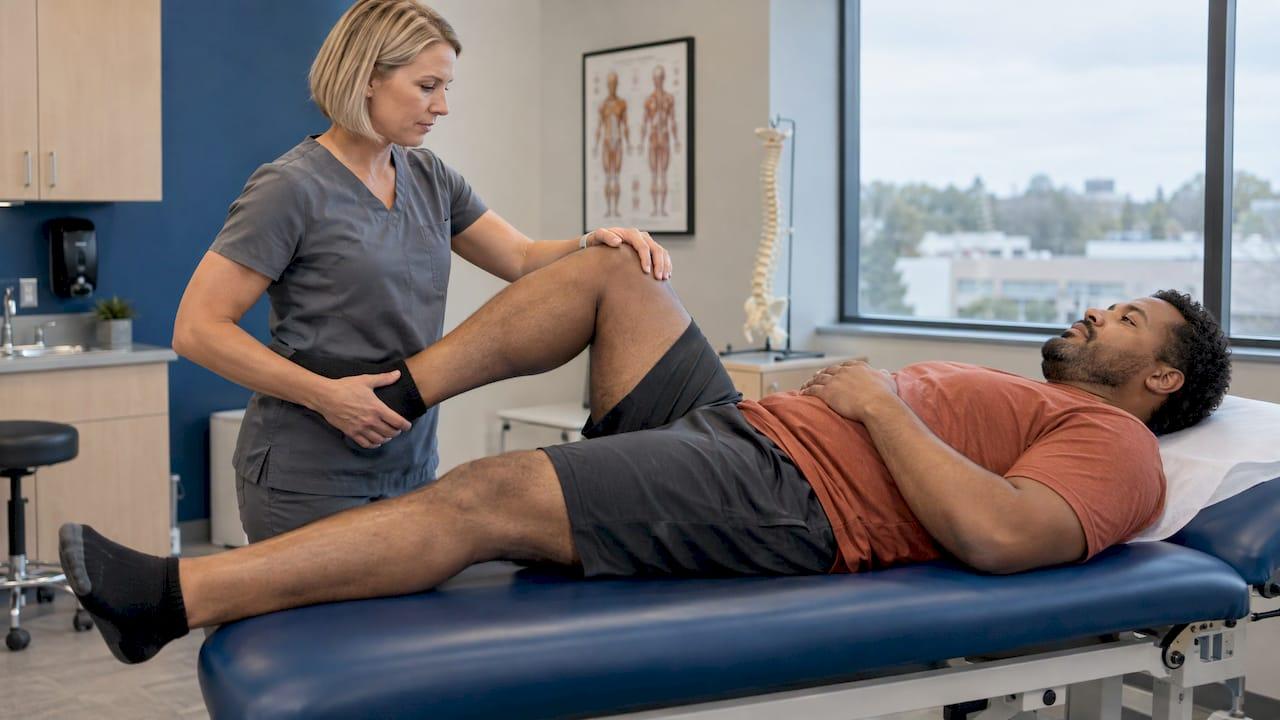
There is no single definitive test. Cleveland Clinic says providers ask about symptoms and activity habits, review your history, examine the hip, buttock and leg, and may order ultrasound, CT, MRI or EMG (a test of nerve and muscle electrical activity) to look for other problems.
StatPearls describes piriformis syndrome as a clinical diagnosis and one of exclusion. Examiners use positioning maneuvers named Freiberg, Pace, Beatty and FAIR to put tension on the piriformis and see whether they reproduce your pain. Imaging is mostly used to exclude a herniated disc, spinal stenosis, facet joint problems or a lumbar muscle strain.

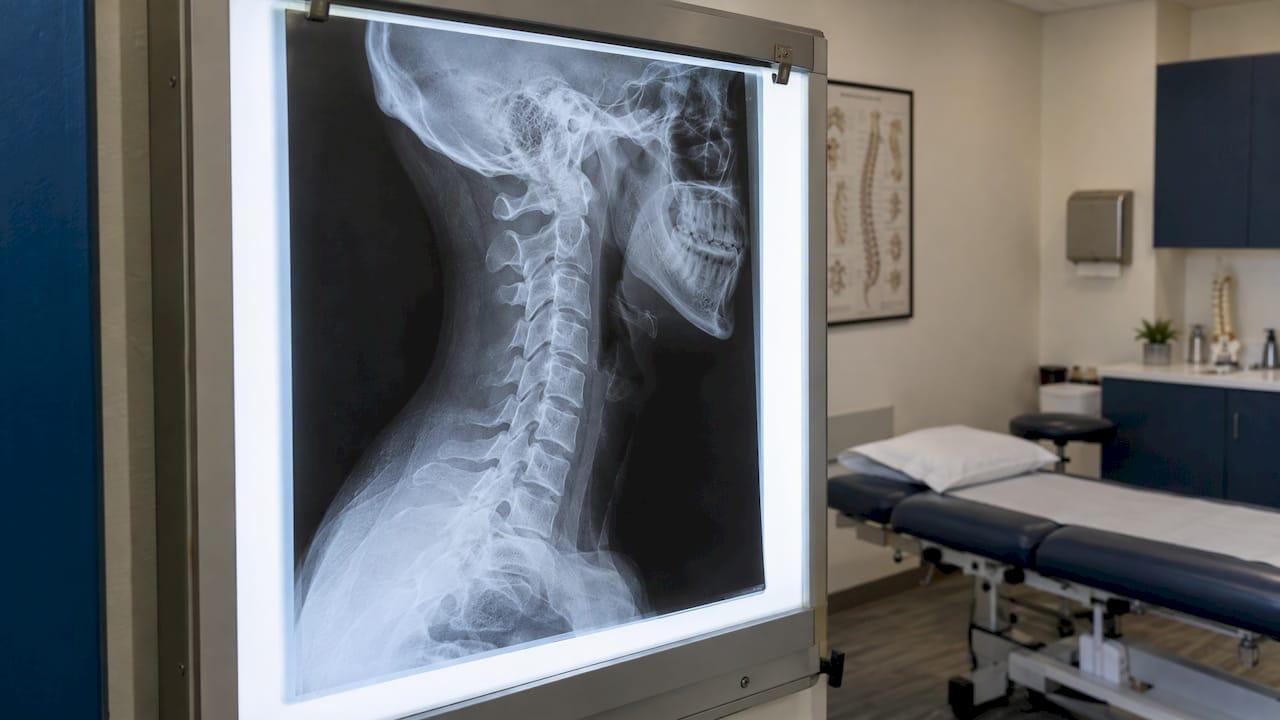
Mayo Clinic notes that people with severe pain, or pain that does not improve within a few weeks, may need X-ray, MRI, CT or EMG. MRI shows herniated disks and pinched nerves.
This is why a practice that measures and images before it treats has an advantage here. When the exam looks at the whole chain, spine, pelvis and hips together, the answer to “which is it?” rests on findings, not on a guess.
Relief while you wait for answers
For piriformis syndrome, MedlinePlus self-care guidance includes:
- Avoiding pain-causing activities such as biking or running until the pain settles.
- Over-the-counter ibuprofen, naproxen or acetaminophen, used as labeled.
- An ice pack for 15 to 20 minutes every few hours, alternated with a heating pad on low for no longer than 20 minutes.
- Stretches your provider directs, and a sitting posture that avoids pressing on the buttock.
StatPearls suggests limiting rest to no more than 48 hours, since staying still too long tends to stiffen the area. Given the stretching caution above, have the cause identified before you launch into an aggressive stretching routine.
On sleep, many people with one-sided leg pain find that lying on the side that does not hurt with a pillow between the knees reduces pull on the hip, or lying on the back with a pillow under the knees. These are comfort measures rather than treatments, so use whichever position lets you sleep.

When to get checked
Make an appointment if the pain lasts longer than a few weeks or begins after an accident or injury. MedlinePlus and Mayo Clinic both give this guidance, with Mayo naming serious symptoms or symptoms lasting more than a month.
Get immediate medical help, from an emergency room or your doctor, for sudden severe low back or leg pain with weakness or numbness, trouble lifting the foot or tripping, or loss of control of the bowels or bladder. Cleveland Clinic’s physician says leg weakness and bowel or bladder problems can signal permanent nerve damage that needs prompt evaluation. The same source notes sciatica usually resolves on its own over weeks to months, and nearly 90% of people are treated without surgery.
Where upper cervical care fits
The low back and pelvis do not work in isolation. The spine is one connected structure, and the way the head sits on the top of the neck affects posture all the way down. At Johnson Spinal Care, our doctors focus on the upper cervical spine, especially the atlas at the top of the neck, and care starts with a comprehensive exam and advanced imaging before any correction. The correction itself is low force, with no twisting, popping or cracking.
If you have leg pain, we can examine you and talk through what we find. You can read more about sciatica care in Minnesota on our site.
Perspective
Most people who come to us with leg pain have already been told it is “sciatica,” and many have tried stretching, medication or massage. The word describes where it hurts, not why.
We believe the answer starts with measurement. We examine and image first, so we are not guessing whether the trouble is in the spine, the pelvis or a muscle. Our approach is a gentle, precise correction with no twisting or cracking, with a plan aimed at holding alignment so you need fewer visits over time.
We have practiced this way since 1986, when Dr. Kerry and Lisa Johnson opened the first NUCCA clinic in Minnesota. Five NUCCA-certified doctors now see patients of all ages at our three Twin Cities clinics.
Johnson Spinal Care Clinical Team
Book an evaluation
If your buttock or leg pain has gone on for weeks and nothing has explained it, a thorough exam is the next step. Our NUCCA doctors see patients at clinics in Apple Valley, Savage and White Bear Lake (Vadnais Heights). Learn more about NUCCA upper cervical chiropractic care or visit the Apple Valley clinic page or the White Bear Lake clinic page to book.

We hold a 4.9-star Google rating across 394 reviews, and most new patients come to us by referral from existing patients and other health professionals.
FAQ
Is piriformis syndrome a type of sciatica?
It is best described as one cause of sciatic-type pain. NICE classes it as extra-spinal sciatica, where the nerve is compressed under the piriformis muscle rather than at the spine. It feels like sciatica but is more localized to the buttock.
Can sciatica cause pain in only the buttock?
Yes. Sciatica can stay in the buttock or reach the calf, foot or toes, usually on one side. Because buttock-only pain can come from the spine, the piriformis or the sacroiliac joint, an exam is what separates them.
Can I diagnose myself with a stretch test?
Not reliably. Clinicians use positioning maneuvers as part of a full exam and rule out other causes first. Stretching hard against a disc problem can aggravate it, so have the cause identified before you push.
How long should I wait before getting evaluated?
If pain lasts more than a few weeks, or follows an accident or injury, schedule an evaluation. Sudden weakness, foot drop or bowel or bladder changes call for immediate medical care.
Sources
- Sciatica | MedlinePlus
- Sciatica | Patient Care, Weill Cornell Medicine
- Piriformis Syndrome: Symptoms, Causes and Treatment | Cleveland Clinic
- Piriformis syndrome | MedlinePlus Medical Encyclopedia
- Differential diagnosis | Sciatica | NICE CKS
- The clinical features of the piriformis syndrome | European Spine Journal, via PMC
- Is Piriformis Syndrome the Same Thing as Sciatica? | Spine-health
- Piriformis Syndrome | StatPearls, NCBI Bookshelf
- Sciatica: Diagnosis and treatment | Mayo Clinic
- Is Your Leg Pain Sciatica or Something Else? | Cleveland Clinic
- Sciatica Symptoms and Causes